The consumer electronics industry's relentless push toward thinner, lighter, and more capable devices is creating a material sourcing challenge that procurement teams are only beginning to fully appreciate. When a foldable phone hinge must survive 200,000 flex cycles in a package thinner than a credit card, when a battery spring contact must deliver consistent force in a space measured in fractions of a millimeter, when a sensor housing must protect sensitive components without adding any perceptible weight—the performance requirements fall entirely on the metal material itself. There is no room for dimensional variation, surface inconsistency, or hardness drift.
This is the environment in which stainless steel strip procurement has become a yield-critical decision. The difference between a strip material with ±0.005mm thickness tolerance and one with ±0.02mm tolerance is invisible to the naked eye but measurable in stamping scrap rates, spring-force variation, assembly interference, and downstream product returns. For buyers sourcing precision stainless steel strip, ultra-thin metal foil, 301 stainless steel for hinges, and precision stamping raw materials for electronics applications, material quality is not a premium—it is the baseline that determines whether the production line runs at acceptable yield or not. SZMate supplies stainless steel strip materials including 304, 304L, 316L, and 324 grades with published width and thickness specifications for industrial and precision applications.
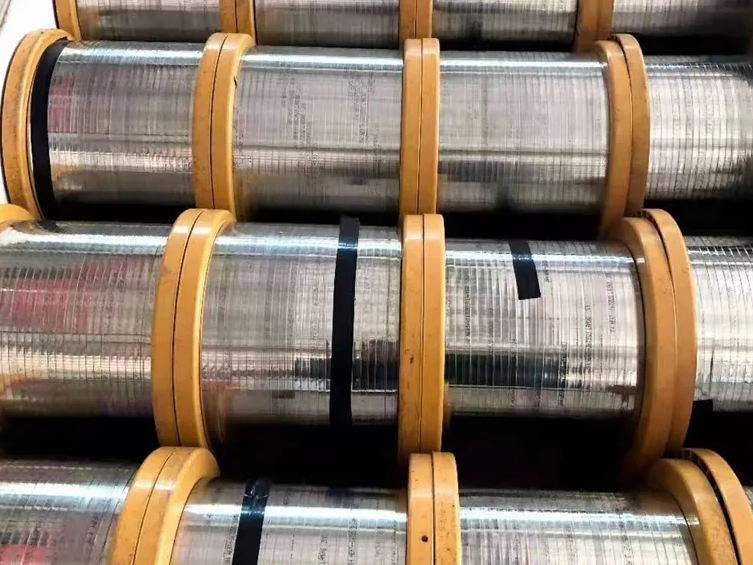
As device dimensions shrink, every component in the assembly must deliver more performance in less space. Plastic and composite materials can reduce weight, but they cannot match stainless steel's combination of tensile strength, elastic recovery, corrosion resistance, thermal stability, and dimensional consistency under repeated mechanical loading.
The specific performance requirements that make stainless steel strip the material of choice for miniaturized electronics are:
Fatigue resistance under repeated flexing. Foldable phone hinges and spring contacts are subjected to mechanical cycling that would cause most materials to fail within weeks. Stainless steel—particularly 301 grade with controlled hardness—maintains its elastic properties through hundreds of thousands of cycles without permanent deformation.
Dimensional stability under thermal and mechanical stress. Electronics operate across a wide temperature range and are subjected to assembly forces, vibration, and impact. A strip material that changes dimensions with temperature or deforms under assembly load creates tolerance stack-up problems that manifest as assembly failures at the device level.
Surface consistency for downstream processing. Stamping, laser cutting, etching, and welding all depend on consistent surface condition. Surface roughness variation, oxide layers, contamination, or coating inconsistency create process variation that reduces yield and increases die wear.
Corrosion resistance in compact assemblies. Miniaturized electronics concentrate dissimilar metals, moisture pathways, and electrochemical gradients in very small spaces. Stainless steel's passive oxide layer provides corrosion resistance that protects both the structural component and adjacent materials.
SZMate describes its stainless steel strips as offering strength, corrosion resistance, versatility, consistent quality, and reliable performance for specialized industrial needs—a specification profile that directly addresses the requirements of precision electronics applications.
Understanding the downstream processing requirements for stainless steel strip helps buyers specify the correct material parameters and evaluate supplier capability accurately.
The micro-stamping production chain
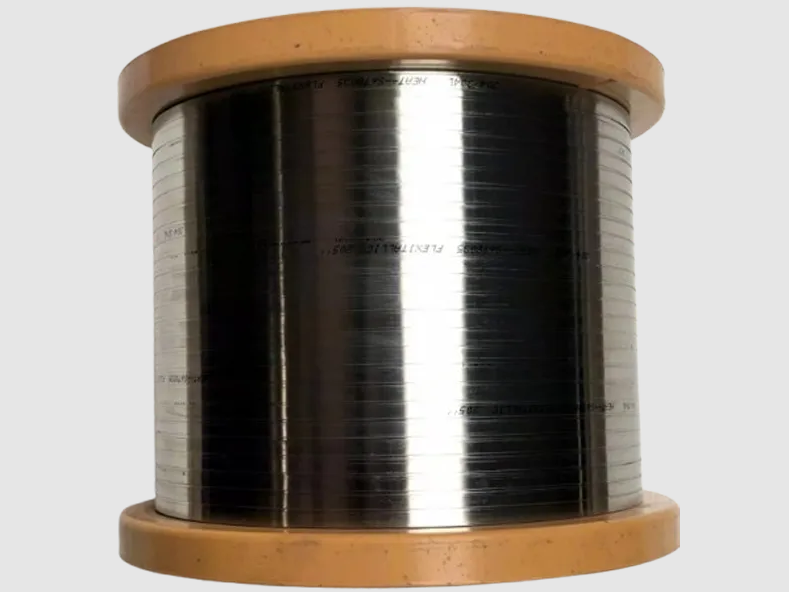
Stainless steel strip is supplied in coil or bobbin form and unwound through a precision leveling system that removes coil set and ensures flatness before the material enters the stamping die. The leveled strip passes through a servo-controlled feeder that advances it by a precise increment with each press stroke. The stamping die forms the required geometry—hinge bracket, spring contact, sensor shell, shielding cover, or structural bracket—in a single stroke or progressive sequence. Finished parts are separated from the carrier strip and transferred to assembly.
At every stage of this process, the strip material's properties directly determine the output quality:
Thickness consistency determines whether the die closes to the correct depth on every stroke. A thickness variation of 0.01mm in a 0.1mm strip represents 10% dimensional variation—enough to change spring force by 30% or more, create burrs on one side of the part, or cause the die to bottom out and crack.
Hardness consistency determines whether the formed part achieves the required spring force and maintains its shape after forming. Hardness variation within a coil—caused by inconsistent cold-rolling or heat treatment—produces parts with different spring forces from the same die setting, creating assembly variation that is difficult to diagnose and expensive to correct.
Surface finish determines the friction coefficient between the strip and the die, affecting forming force, die wear rate, and part surface quality. A consistent, clean surface with controlled roughness reduces die wear and improves part-to-part consistency.
Edge condition determines whether the slit edge of the strip introduces burrs or stress concentrations that propagate into the formed part. A clean, deburred edge reduces the probability of cracking during tight-radius forming operations.
For ultra-thin electronics applications below 0.05mm, buyers should confirm custom rolling capability, tolerance specification, hardness control, and surface requirements directly with the supplier in the RFQ process.
Effective procurement of stainless steel strip for electronics applications requires a specification package that goes well beyond material grade and nominal thickness.
Material Grade Selection
| Grade | Key Properties | Best Application |
|---|---|---|
| 301 | Higher strength, better spring performance, work-hardens rapidly | Hinges, spring contacts, elastic structural parts |
| 304 | General corrosion resistance, good formability | Sensor housings, brackets, general stamped parts |
| 304L | Lower carbon, better weldability | Welded assemblies, corrosion-sensitive applications |
| 316L | Superior corrosion resistance, molybdenum addition | Marine, medical, high-humidity electronics |
Complete Specification Checklist
Thickness and tolerance: the most critical specification for micro-stamping. Confirm nominal thickness, plus/minus tolerance, and measurement method. For electronics applications, request tolerance reports from the supplier's production data rather than relying on catalog specifications.
Width and slit tolerance: confirm coil width against the stamping die width requirement. Slit width tolerance affects part-to-part consistency in progressive dies where the strip edge is used as a reference.
Hardness and temper: specify the required hardness range (soft, 1/4H, 1/2H, 3/4H, full hard) based on the forming operation and required spring force. Request hardness test data from the production coil, not only the material certificate.
Surface finish: specify the required surface roughness (Ra value) and any surface treatment requirements. Bright annealed finish provides the most consistent surface for precision stamping; 2B finish is standard for general applications.
Edge condition: specify slit edge, deburred edge, or rounded edge based on the forming operation. Tight-radius bending operations benefit from deburred or rounded edges that reduce stress concentration.
Flatness: specify maximum camber (lateral bow) and wave height. Poor flatness causes feeding errors in high-speed stamping and creates dimensional variation in formed parts.
Coil and bobbin format: confirm bobbin weight (SZMate's standard is 15–20kg per bobbin), coil inner and outer diameter, and packaging requirements for moisture protection and anti-scratch handling.
Inspection documents: material certificate with heat number traceability, thickness measurement report, hardness test data, and surface inspection record.
Foldable Phone Hinges
The hinge mechanism of a foldable smartphone is one of the most mechanically demanding components in consumer electronics. It must support the display through hundreds of thousands of flex cycles while maintaining precise angular positioning and smooth operation. 301 stainless steel for hinges is the standard material choice because its work-hardening behavior allows the strip to be supplied in a partially hardened condition that provides the required spring force and fatigue resistance after forming. Thickness tolerance control is critical because hinge geometry tolerances are typically ±0.01mm or tighter.
Battery Spring Contacts
Thin stainless strip stamped into battery contacts, support tabs, and positioning springs must deliver consistent contact force across the full production volume. Spring force variation caused by thickness or hardness inconsistency creates battery contact resistance variation that affects device performance and battery life. For this application, hardness consistency within the coil is as important as nominal hardness—a coil with ±5 HV hardness variation produces spring contacts with ±15% force variation, which is typically outside the acceptable range for premium consumer electronics.
Precision Sensor Housings
Miniature sensors for pressure, temperature, motion, and environmental monitoring require thin, stable, corrosion-resistant metal shells that protect internal components without increasing device size. Ultra-thin stainless strip with consistent thickness and surface finish allows sensor housings to be deep-drawn or formed to tight dimensional tolerances, ensuring consistent sensor performance across production volumes.
Wearable Electronics
Smart watches, wireless earbuds, medical wearables, and compact consumer devices need lightweight structural and shielding components that fit within extremely tight space envelopes. Stainless steel strip provides the strength-to-thickness ratio that allows these components to be thinner than equivalent aluminum or plastic parts while maintaining the required structural integrity.
EMI Shielding and Grounding Parts
Stainless steel strip can be processed into shielding covers, grounding springs, and micro-stamped conductive support parts that protect sensitive electronics from electromagnetic interference. The combination of electrical conductivity, spring performance, and corrosion resistance makes stainless steel the preferred material for these applications in high-density electronics assemblies.
Industrial Gasket and Composite Sealing Material
Beyond electronics, SZMate also positions stainless steel strip as a high-performance gasket-making material, commonly used with graphite materials in composite gasket construction for industrial sealing applications. The same dimensional consistency and surface quality that benefits electronics stamping also improves gasket performance and sealing reliability.
Selection Workflow
Step 1: Define the final part geometry and performance requirements. Hinge, spring contact, sensor shell, shielding cover, bracket, or gasket. The part geometry determines the required forming operations, which in turn determine the required material hardness, thickness tolerance, and edge condition.
Step 2: Select the material grade based on the performance requirements. 301 for spring performance and fatigue resistance; 304/304L for general corrosion resistance and formability; 316L for superior corrosion resistance in demanding environments.
Step 3: Specify thickness and tolerance based on the part dimensional requirements and the stamping process capability. For electronics miniaturization, request ultra-thin specifications and tolerance reports from the supplier's production data.
Step 4: Match hardness to the forming process. Too hard may crack during tight-radius forming; too soft may lose spring force or dimensional stability after forming. Request hardness test data from the production coil.
Step 5: Validate stamping performance on a trial coil before committing to bulk orders. Test burr level, spring force, fatigue life, flatness after forming, and die wear rate. Document the results as the acceptance standard for subsequent orders.
Step 6: Lock packaging and coil format. Confirm bobbin weight, anti-scratch packaging, moisture protection, and label traceability to ensure consistent handling from the supplier's warehouse to the stamping line.
TCO Advantages of Premium Strip Material
Higher stamping yield is the primary TCO driver. A strip material with stable thickness and hardness produces more good parts per coil than a material with variable properties—directly reducing the scrap cost per good part.
Lower die adjustment frequency reduces the setup time and die wear associated with compensating for material variation. A stamping line that runs without die adjustment for an entire coil produces more parts per shift than one that requires frequent adjustment.
Better spring-force consistency reduces the assembly failure rate caused by out-of-specification spring contacts, hinge mechanisms, or structural brackets. For premium consumer electronics, a single assembly failure that reaches the customer creates warranty and brand costs that far exceed the material cost difference between standard and premium strip.
Reduced downstream quality risk from consistent surface finish and edge condition reduces the probability of corrosion, fatigue failure, or assembly damage that creates product returns and customer complaints.
Miniaturized electronics in 2026 demand metal materials that are thinner, stronger, and more dimensionally consistent than previous generations of components required. High-quality stainless steel strip with controlled thickness tolerance, consistent hardness, clean surface finish, and deburred edges helps buyers improve stamping yield, reduce assembly defects, stabilize hinge and spring-contact performance, and support next-generation compact device design. SZMate supplies stainless steel strip materials in 304, 304L, 316L, and 324 grades with multiple width options for industrial and precision applications. For electronics-grade ultra-thin requirements, submit detailed thickness, tolerance, hardness, surface, and stamping requirements to confirm the best configuration.
Visit the SZMate Stainless Steel Strip product page to request a recommended configuration and quotation.
Please submit the following details for an accurate recommendation:
Work condition: Electronics, hinge, battery contact, sensor housing, EMI shielding, gasket, stamping line, corrosion environment
Quantity: Sample coil, trial order, bulk order, or annual procurement plan
Size/spec: Material grade, thickness, width, tolerance, hardness/temper, surface finish, edge condition, bobbin or coil weight
Target metrics: Stamping yield target, fatigue life requirement, spring force specification, burr control standard, thickness stability, corrosion resistance requirement
Current problems: Unstable thickness, high stamping scrap rate, burrs, cracking during forming, poor spring force consistency, assembly interference, inconsistent coil quality across orders
1. What is stainless steel strip?
A thin, flat stainless steel material supplied in coil or bobbin form, used for precision stamping, forming, gasket production, springs, brackets, shielding covers, hinges, and structural components in electronics and industrial applications. Available in multiple grades including 301, 304, 304L, and 316L with custom thickness, width, hardness, and surface finish options.
2. Stainless steel strip vs. aluminum foil vs. copper strip: which is better for electronics?
Stainless steel strip offers superior strength, fatigue resistance, and corrosion resistance—the best choice for hinges, spring contacts, and structural components where mechanical performance is the priority. Aluminum foil is lighter and easier to form, making it suitable for shielding applications where weight is critical. Copper strip offers better electrical and thermal conductivity, making it the preferred choice for high-current contacts and heat dissipation components. The best choice depends on the specific performance requirements of the application.
3. What is the ROI of precision stainless steel strip for electronics manufacturing?
ROI comes from higher stamping yield (fewer rejected parts per coil), lower die adjustment frequency (reducing setup time and die wear), better spring-force consistency (reducing assembly failure rate), reduced downstream quality risk (fewer product returns), and more stable repeat orders (reducing incoming inspection burden). For high-volume electronics production, a 1% improvement in stamping yield on a 10-million-part annual volume represents 100,000 additional good parts—a significant financial return on the material quality investment.
4. Does using ultra-thin stainless steel strip require process modification?
Sometimes. Ultra-thin materials below 0.05mm may require improved feeding tension control to prevent strip breakage, precision leveling to ensure flatness, sharper dies with tighter clearances to control burr formation, and stricter storage and handling procedures to prevent deformation from coil handling. Buyers should discuss process requirements with the supplier during the sample evaluation stage to identify any necessary process adjustments before committing to bulk production.
5. What parameters are needed for correct selection and quotation?
Material grade, nominal thickness and tolerance, width and slit tolerance, hardness or temper specification, surface finish requirement, edge condition, coil or bobbin weight, application description (hinge, spring contact, sensor housing, shielding, gasket), stamping process details (progressive die, single-stroke, deep draw), target stamping yield, annual quantity, and current quality problems such as thickness variation, burrs, cracking, or spring-force inconsistency.