A spiral wound gasket factory can lose productivity before the first machine cycle begins if the winding orientation does not match the product range. Standard and small-diameter gaskets are usually easier to handle on compact vertical systems, while large-diameter gaskets need stable horizontal support, wider operator access and a different approach to strip and filler management. The difference is therefore not cosmetic. Machine orientation affects tooling, ergonomics, cycle time, changeover, floor space, material flow and the practical upper limit of production.
This guide compares vertical, fully automatic and horizontal winding systems using published SZMATE specifications as practical examples. It is written for gasket manufacturers, project engineers and procurement teams that need to decide whether one machine can cover the required range or whether the factory should divide production into standard-size and large-diameter cells.
The analysis begins with the gasket process, then evaluates size, speed, material support, welding, quality control, layout and return on investment. A comparison table and decision matrix are included so the article can be used as a preliminary equipment-selection document.
A spiral wound gasket machine forms a metal strip and winds it together with a soft filler into a controlled layered sealing element.
The metal strip, commonly stainless steel, provides structural support and recovery. The filler, often graphite or PTFE, provides conformability and sealing contact. During production, the materials must enter the winding zone with stable alignment and tension. The strip is normally formed into a profile before or during winding, and the layers are secured through controlled welding.
A complete spiral wound gasket machine process may include strip feeding, strip forming, filler feeding, winding, welding, cutting, diameter measurement and ejection. Depending on the gasket type, the winding element may later be assembled into an inner ring or guide ring. This means the winding unit is central, but it is not the only determinant of finished-line capacity.
Machine orientation describes the position in which the gasket is supported and rotated. In a vertical system, the gasket plane is generally vertical. In a horizontal system, the gasket lies or is supported in a horizontal plane. Each orientation has distinct mechanical and operational advantages.
A spiral wound gasket is built by alternating formed metal and filler layers under controlled tension until the required inner and outer diameters are reached.
The process starts with a selected strip grade, width and thickness. The strip is guided through a former that creates the profile required for winding. Filler tape is introduced beside the metal. Both materials must remain centered because lateral movement can produce uneven edges, unstable density or poor ring fit.
The initial turns establish the inner structure. Controlled welding secures the beginning of the winding. The machine then adds the required number of metal and filler layers. As the outside diameter approaches the programmed value, material feeding and cutting must be coordinated so the winding ends cleanly and the final weld is positioned correctly.
Dimensional accuracy depends on more than mandrel size. Strip thickness, filler compression, forming pressure, tension, weld position and springback all influence the result. For that reason, an automatic measuring function and a validated recipe can improve repeatability, but first-piece inspection remains necessary.
When a guide ring or inner ring is required, downstream ring production and assembly must match the winding output. A winding machine that produces elements rapidly will create work-in-process inventory if ring preparation cannot keep pace.
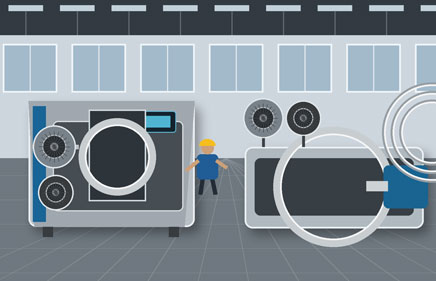
A vertical winding machine supports the spiral wound gasket in a vertical plane, offering compact handling for small and standard industrial sizes.
Vertical orientation allows the operator to view the winding edge directly and can reduce the floor footprint compared with a large horizontal platform. It is commonly used for a broad range of standard diameters. Material bobbins and filler supports can be positioned close to the forming and winding zone, reducing the path between supply and production.
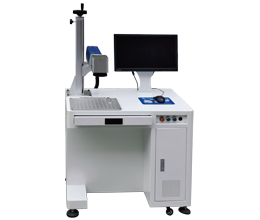
The SZMATE MV-01 vertical winding machine is a semi-automatic system with PLC control, automatic welding, automatic strip feeding and cutting, filler-break detection and dimensional measurement. Its published specification table lists a work range from 1/2 inch to 10 inches, a cycle time of about 20 seconds for a 3-inch gasket, five-to-ten-minute changeover and storage for hundreds of parameter sets.
The machine still requires manual material handling in parts of the process, so it combines automation with operator supervision. That structure is suitable for factories that need standard-size output but also want flexibility across different pressure classes, materials and order quantities.
A horizontal winding machine supports the gasket in a horizontal plane so large diameters can be formed with stable support and accessible material control.
Large rings are difficult to support vertically because weight, deflection and operator reach increase with diameter. A horizontal platform distributes the work differently and gives the operator access around a wider perimeter. It also allows material supports and measuring systems to be arranged for oversized products.
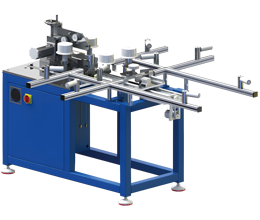
The SZMATE MH-02 horizontal winding machine is designed for large spiral wound gaskets. Its published range begins around 12 inches and extends to 3,500 mm. The specification lists approximately 60 seconds for a 16-inch gasket, five-to-ten-minute changeover, automatic welding, filler-break control, flange-width measurement and capacity for a substantial strip spool and multiple filler pancakes.
A horizontal machine occupies more space and usually requires a dedicated material route, but the additional footprint should be judged against the need to support large work safely and consistently. Trying to force oversized production onto a compact machine can create handling risk, quality variation and excessive operator effort.
The most important difference is that vertical systems favor compact standard-size production, while horizontal systems favor stable large-diameter manufacturing.
| Comparison Item | Vertical Winding Machine | Horizontal Winding Machine | Selection Impact |
|---|---|---|---|
| Typical product range | Small to standard diameters | Large and very large diameters | Start with annual demand by diameter |
| Published SZMATE example | MV-01: 1/2"–10" in specification table | MH-02: about 12"–3500 mm | Ranges are complementary, not interchangeable |
| Example cycle time | About 20 seconds for a 3" gasket | About 60 seconds for a 16" gasket | Different gasket sizes make direct speed comparison misleading |
| Footprint | More compact | Larger dedicated area | Include access and material staging |
| Operator reach | Convenient for standard sizes | Better access to large circumference | Ergonomics change with diameter |
| Material support | Compact strip and filler path | Expanded supports for large parts | Prevent sagging, twisting and unstable feed |
| Changeover | Efficient across recurring standard sizes | Requires planning for large tooling and setup | Measure complete first-good-piece time |
| Best factory role | Core standard-size production | Large-diameter specialty cell | Many plants need both |
A 20-second cycle on a 3-inch product cannot be compared directly with a 60-second cycle on a 16-inch product. The larger gasket contains more material, requires a longer winding path and may need more handling. Productivity should therefore be expressed in good units per shift for each size family, or in value-added output per hour, rather than one universal pieces-per-minute number.
Diameter distribution is the first and most reliable filter for choosing machine orientation.
Build a histogram of annual demand by nominal size. Separate standard recurring products from occasional specials. A factory may discover that 80% of its pieces are below 6 inches, while most revenue from special projects comes from gaskets above 24 inches. That pattern supports separate cells even if one machine claims a broad nominal range.
For small and medium diameters, a vertical or fully automatic system can minimize handling and improve cycle consistency. For large diameters, horizontal support becomes increasingly valuable. The exact transition point depends on tooling, gasket construction, operator method and factory standards, but it should be demonstrated with representative products before purchase.
Do not evaluate only maximum diameter. Minimum diameter, inner-ring configuration, pressure class, strip width and filler construction also matter. A machine optimized for large rings may not be efficient for repeated small parts. Likewise, a compact automatic system may not provide the support and reach required for very large gaskets.
Record the product mix in four groups: high-volume standard, low-volume standard, high-volume special and low-volume special. The equipment strategy should protect the first group, remain flexible for the second and fourth groups, and provide dedicated engineering for the third.
Sustainable output is determined by cycle time plus loading, changeover, inspection, replenishment and downtime.
Published cycle time is useful for comparing similar products, but it is not a guarantee of daily production. The complete operating cycle may include loading a ring, feeding material, winding, welding, cutting, removing the part and performing an inspection. Ask which of these steps are included in the quoted figure.
For the MV-01 example, a 20-second cycle for a 3-inch gasket suggests a theoretical ceiling of 180 cycles per hour. If effective OEE is 75%, the approximate rate becomes 135 good pieces per hour. A horizontal system making a 16-inch gasket at 60 seconds has a theoretical ceiling of 60 cycles per hour; at the same OEE, it would produce about 45 good pieces. The comparison is still incomplete because the products differ substantially in size and sales value.
Use production-weighted demand. Multiply the expected pieces of each size by its verified cycle time. Add setup time and expected stops. This creates a realistic annual machine-hour requirement. If the requirement exceeds available hours at the target utilization, the factory needs additional capacity or a revised product allocation.
Large-diameter orders may be less frequent but more urgent. Reserve capacity or schedule protected windows so special projects do not disrupt the standard-size line. A separate horizontal cell can isolate that variability.
Stable strip and filler delivery is essential because winding quality depends on alignment, tension and material continuity.
Metal strip must be supported from the spool through the former to the winding point. Excessive tension can distort the profile or increase weld stress. Insufficient tension can produce loose layers or unstable geometry. A buffering mechanism can smooth the effect of spool inertia and changing coil diameter.
Filler tape is more fragile and sensitive to edge damage. Multiple filler pancakes reduce replenishment frequency, but the transition between pancakes must be managed without introducing a thickness discontinuity. Break detection allows the machine to stop before an incomplete section becomes a full reject.
On a compact vertical machine, the material path is relatively short and easy to observe. On a large horizontal system, supports must prevent dragging, twisting or uncontrolled movement over a wider area. The machine layout should also provide safe space for replacing heavy strip spools and storing filler close to the point of use.
Run material trials with the actual grades and dimensions. A system demonstrated only with the supplier’s preferred strip or filler may behave differently with the buyer’s qualified materials. Acceptance should include representative low-friction, high-friction and fragile filler conditions when those are part of the product portfolio.
Welding, cutting and diameter measurement convert a stable winding into a repeatable finished element.
The start weld secures the first layers. The final weld secures the completed winding. Weld energy, position and surface condition influence integrity. Automatic welding can improve repeatability, but the process still needs visual criteria and periodic destructive or functional verification where required.
Automatic strip cutting reduces manual handling and can improve end consistency. The filler may require separate cutting logic because its compression and break behavior differ from metal. The sequence must prevent loose ends from entering the sealing surface.
Diameter control should be verified against calibrated measurement. A programmed target does not guarantee final size if material thickness, tension or springback changes. The MV-01 product information describes automatic dimensional control and tight outside-diameter consistency. Buyers should confirm the acceptance tolerance for their specific products and standards.
For large diameters, measurement becomes more challenging because ring support, thermal conditions and handling can influence the reading. Define the measurement method, number of points and allowable ovality. The factory should use the same method during machine acceptance and routine production.
A vertical winding cell should minimize operator walking while separating material supply, production, inspection and finished-part flow.
Place strip and filler staging close to the machine but outside the operating and maintenance envelope. Provide space to remove spools without crossing the finished-product path. Tools, mandrels and gauges should have fixed locations with visual identification.
The operator should be able to view the winding zone, control panel and material feed without repeated twisting or long reach. Finished elements should move to inspection or assembly in one direction. Avoid returning parts through the incoming material area.
If one operator supervises multiple machines, arrange them so alarms and status lights are visible. Walking distance should be measured during a simulated batch. A theoretically efficient multi-machine assignment may fail if the operator spends most of the cycle moving between loading points.
Include maintenance access behind panels and around motors, welding components and material paths. A compact layout that blocks service access will increase downtime later. The cell drawing should show machine footprint, guarded envelope, electrical cabinet clearance, utility drops, material racks and operator work zones.
A horizontal winding cell requires a larger controlled area for oversized rings, material support and safe operator access around the machine.
Large gaskets may need support tables, lifting aids or dedicated racks. The entry route from ring preparation to winding should be free of narrow turns and obstructions. Finished parts must be protected from bending, impact and contamination during transfer.
The MH-02 published machine profile is approximately 4,000 by 3,500 by 1,100 mm. That figure represents the machine itself, not the complete operating cell. Additional space is needed for material pancakes, strip spools, welding access, gauges, part racks and maintenance.
Plan for one-way movement of large parts. If operators must rotate or carry a large ring through a crowded aisle, quality and safety risks increase. Mechanical assistance should be considered based on part weight and handling frequency.
Large-diameter work may also create more variation in order timing. Provide a staging system that identifies product code, material batch, inspection status and destination. This prevents mixed components from entering the wrong assembly or shipment.
A fully automatic winding system is most effective when the product range is narrow enough for standardized loading, tooling and handling.
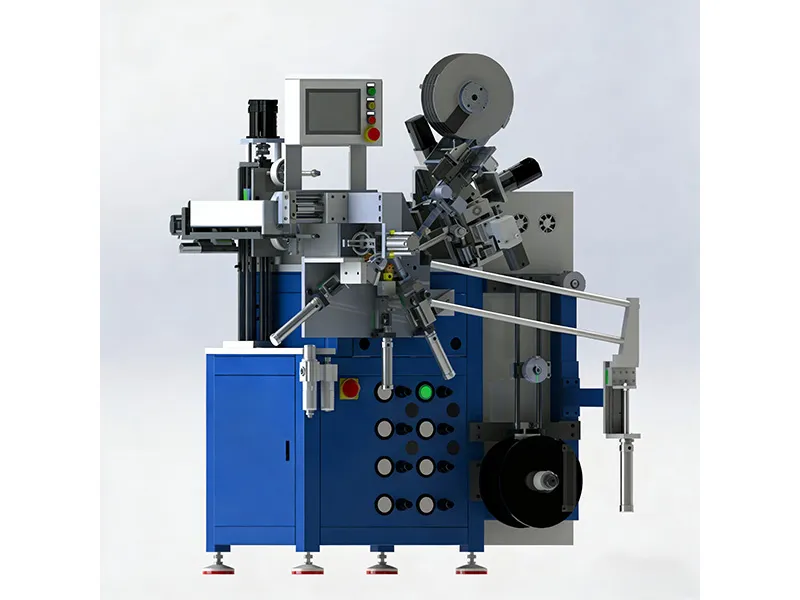
SZMATE’s MV-01A is an example of a system designed for recurring small-to-medium products. Its published specification lists 1/2-inch to 6-inch work range, automatic strip and filler feeding and cutting, automatic filler-pancake shifting, gasket ejection and storage for 500 parameter sets. A 3-inch example cycle is about 20 seconds.
These functions reduce repetitive intervention and support high-volume production. The economic case becomes stronger when the same products are ordered frequently, materials are consistent and downstream assembly can keep pace.
Full automation does not remove the need for a vertical or horizontal strategy. It adds a third category: high-volume standardized winding. A factory may operate a fully automatic small-size cell, a flexible vertical cell for broader standard sizes and a horizontal cell for large diameters.
The most effective allocation is based on product families. Assign stable high-volume items to the automatic line. Use the vertical semi-automatic machine for mixed standard sizes and development. Use the horizontal machine for large or oversized work. This reduces changeover and protects each cell from unsuitable orders.
Vertical and horizontal machines share core quality risks, but the dominant handling and support risks differ by diameter.
| Risk | Vertical System | Horizontal System | Control |
|---|---|---|---|
| Material misalignment | Visible at compact winding zone | Longer path may require more guides | Guide inspection and centerline checks |
| Ring support | Suitable for standard sizes | Critical for large diameters | Stable supports and defined handling |
| Operator reach | Generally compact | Wider working area | Ergonomic access around perimeter |
| Diameter verification | Fast for standard parts | Multiple-point measurement may be needed | Common calibrated method |
| Changeover error | Recipe and tooling mismatch | Large tooling and setup complexity | Checklist and first-piece approval |
| Material replenishment | Frequent on high-volume production | Heavier or larger supplies | Planned staging and lifting method |
Process capability should be measured separately for representative size families. A machine may hold excellent diameter consistency on a 3-inch product and require different controls on a 36-inch product. Avoid using one capability result to represent the entire advertised range.
A decision matrix turns product and factory requirements into a transparent equipment choice.
Choose a fully automatic winding system when most demand is recurring, sizes fall within a standardized range, batches are long and labor touch time is a major cost.
Choose a vertical semi-automatic system when the factory needs broad standard-size flexibility, frequent changeovers, sampling or mixed production.
Choose a horizontal system when large diameters, stable support and operator access are primary requirements.
Choose multiple cells when no single orientation can serve the product mix efficiently.
Assign weights to size coverage, output, flexibility, labor, quality, floor space, maintenance, safety and installed cost. Score each configuration from one to five. The weighting should reflect the buyer’s business model. A custom gasket workshop may assign more weight to flexibility, while a high-volume OEM supplier may assign more weight to output and repeatability.
Do not allow the lowest purchase price to dominate the matrix. A machine that cannot cover the profitable product range has no economic advantage. Similarly, the highest automation score is not automatically best if the line remains idle because demand is variable.
Machine acceptance should verify representative production, not only no-load movement and a single sample.
Select at least three products: a common high-volume size, a challenging size near the machine’s practical limit and a product requiring a meaningful changeover. Use the buyer’s actual strip and filler when possible.
Measure cycle time from a clearly defined start and stop point. Record loading, welding, cutting, removal and first-piece inspection. Verify repeated dimensions across a consecutive batch. Test filler-break detection, emergency stops, guarding and recovery from an interrupted cycle.
For a horizontal system, include a large product that tests support and measurement. For a vertical or automatic system, include a recurring standard product and a changeover. Confirm parameter storage, recipe recall and access control.
The acceptance document should identify open items, responsible parties and completion dates. Training should include setup, normal production, alarm recovery, consumable replacement, preventive maintenance and software backup.
These questions summarize the most common points buyers should resolve before choosing winding orientation.
A compact vertical or fully automatic system is usually more efficient for small recurring sizes because material paths, tooling and handling can be standardized. The final choice depends on batch size, inner-ring requirements, available automation and annual volume.
Horizontal support reduces handling difficulty and gives the operator access around a large circumference. It can also help control deflection and material placement on diameters that would be difficult to support vertically.
Only when the required diameter range and handling conditions remain within the vertical system’s practical capability. If large products create unstable support, poor access or excessive manual handling, a horizontal machine is the safer and more productive choice.
No. Cycle time must be combined with changeover, replenishment, inspection, downtime, yield and product value. A faster small-size cycle does not prove that the same machine is more productive for large or mixed products.
Reserve more than the machine footprint. Include guarded clearance, maintenance access, strip and filler staging, tooling, inspection, operator movement, finished-part racks and lifting equipment. Large horizontal cells need especially careful material-flow planning.
Provide gasket standards, diameter range, pressure classes, construction, metal and filler materials, annual volume by size, typical batch quantity, target cycle time, available floor space and required automation. This allows SZMATE to compare vertical, horizontal and fully automatic options.
Vertical and horizontal winding machines serve different production geometries, and many gasket factories need both rather than forcing one orientation across the entire range.
Use a fully automatic or vertical system for recurring small and standard sizes. Use a horizontal system for large diameters that require stable support and wide access. Base the decision on annual demand by size family, verified cycle time, complete changeover, material handling, inspection and factory layout.
A practical SZMATE configuration may combine an automatic small-size cell, an MV-01-style vertical cell for flexible standard production and an MH-02-style horizontal cell for large gaskets. The best configuration is the one that protects high-volume delivery while preserving the ability to manufacture special products safely and consistently.
ASME B16.20 – Metallic Gaskets for Pipe Flanges: https://www.asme.org/codes-standards/find-codes-standards/b16-20-metallic-gaskets-pipe-flanges
OSHA Machine Guarding – General Requirements: https://www.osha.gov/etools/machine-guarding/introduction/general-requirements
ISO 9001 Explained – Process Approach and Quality Management: https://www.iso.org/home/insights-news/resources/iso-9001-explained.html