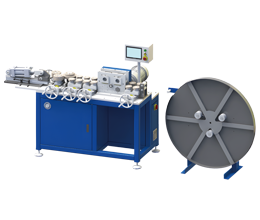
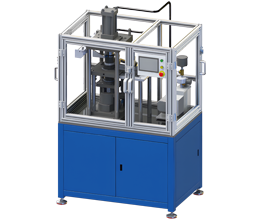
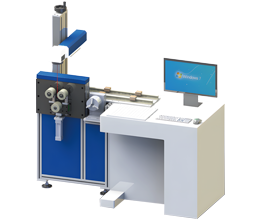
The global gasket seal machine market is experiencing significant growth, projected to expand from USD 550.6 million in 2025 to USD 879.9 million by 2035, growing at a CAGR of 4.8% . This explosive market expansion reflects a critical reality: industries worldwide are investing heavily in precision gasket manufacturing equipment to meet stringent sealing requirements across automotive, aerospace, chemical, and energy sectors. If you’re evaluating gasket machines for sale, understanding the market landscape and technological innovations is essential to making an informed investment decision.
Modern manufacturing demands leak-proof, reliable sealing solutions under extreme conditions. A single gasket failure in petrochemical pipelines, power generation facilities, or aerospace applications can result in catastrophic downtime, safety hazards, and regulatory penalties. Consequently, manufacturers are shifting from manual gasket production to automated, precision-engineered equipment .The market data tells a compelling story: automatic gasket seal machines dominate with 62% of the global market share as of 2025, driven by their ability to deliver superior precision, reduced labor costs, and ISO-certified consistency . This automation trend reflects a fundamental shift in manufacturing philosophy—from cost-cutting to quality assurance and operational efficiency.
When evaluating gasket machines for sale, you’ll encounter several critical technological innovations that directly impact ROI and production capabilities:
Advanced gasket machines now feature multi-axis CNC systems with real-time viscosity control, dynamic mixing heads, servo drives, and programmable dispensing paths. According to industry data, over 46% of new machines deployed in 2024 incorporated these advanced CNC capabilities. These systems minimize human error, enhance production speed, and ensure consistent gasket quality across batches.
Modern gasket machines connect to networked sensors and advanced analytics platforms, enabling continuous insights into equipment performance, material properties, and production parameters . This connectivity allows manufacturers to catch irregularities early, reduce rework rates, and maintain steady product quality—critical advantages in sectors where safety and consistency are paramount.
Automated gasket machines operate at significantly higher speeds without compromising quality, directly translating to increased production capacity. This efficiency enables manufacturers to respond promptly to customer demands and scale operations without proportional increases in labor costs.
The gasket machine market segments into several categories, each serving distinct manufacturing needs:
Winding Machines (32% market share)
Winding machines lead the market, specifically for spiral-wound gasket production. These machines excel in high-pressure applications where layered metal and filler materials create superior sealing under extreme conditions. Industries such as oil and gas, power generation, and aerospace rely heavily on winding machines for critical applications.
Foam-in-Place (FIP) Technology (Rapid Growth Sector)
High-precision FIP technology is rapidly gaining preference for sealing complex geometries. This emerging segment represents one of the fastest-growing opportunities in the gasket machine market, particularly for electronics, HVAC, and automotive applications.
Hydraulic and Forming Machines
The hydraulic gasket forming machine market, valued at USD 285.4 million in 2025, is projected to reach USD 498.7 million by 2034 (CAGR 5.8%) . These machines are essential for kammprofile and other profile-based gasket production.
Understanding regional growth patterns helps identify market opportunities and competitive dynamics:
India (5.6% CAGR) leads global growth, driven by strong industrialization and local manufacturing incentives. Demand is scaling rapidly across automotive components, electrical housings, and heavy equipment production.
China (5.2% CAGR) follows closely, propelled by EV battery production, electronics manufacturing, and industrial panel expansion.
USA (4.1% CAGR) maintains steady adoption, driven by aerospace, telecom, and smart grid industries requiring precision sealing solutions.
Europe (Germany, Italy) continues showing strong activity in precision manufacturing and Industry 4.0 upgrades, with established manufacturers investing in next-generation equipment.
Gasket manufacturing plants demonstrate attractive financial metrics for equipment investment:
Gross Margin: 35-45% across the industry
Net Profit Margin: 18-25% for well-optimized operations
Raw Material Costs: 60-70% of operating expenses (OpEx)
Utilities and Support: 10-15% of OpEx
These metrics indicate that gasket machine investments generate substantial returns, particularly when integrated with Industry 4.0 technologies that reduce operational costs and increase throughput.
Different industries demand different gasket specifications. Oil and gas applications require machines capable of producing gaskets that withstand pressures up to 400 bar and temperatures exceeding 550°C . HVAC and electrical applications may prioritize precision and speed over extreme-condition capabilities. Ensure the machine you’re evaluating aligns with your primary market applications.
Modern gasket machines range from compact units producing ½" to 12" gaskets to large-scale systems handling 30" diameters with and without inner rings . Evaluate your current and projected production volumes to select appropriate capacity. Undersizing creates bottlenecks; oversizing wastes capital.
While fully automatic machines command premium prices, they deliver superior ROI through reduced labor costs, higher consistency, and faster production cycles. Calculate the payback period based on your current labor costs and production targets.
Gasket machine technology is sophisticated. Verify that your equipment supplier provides comprehensive training, technical support, and access to spare parts. Poor support can result in extended downtime and lost production capacity.
Ensure machines comply with international standards (ISO certifications, ASME B16.20 for flange compatibility, etc.). Compliance is non-negotiable for industries with stringent regulatory requirements.
The gasket machine market faces several headwinds:
Raw Material Price Volatility: Fluctuating costs for metals and elastomers directly impact manufacturing margins . Modern machines with real-time material tracking help mitigate this risk.
High Validation and Testing Costs: Entering new market segments requires extensive testing and certification, creating barriers to entry but also protecting established manufacturers from commoditization.
Slow Adoption in Cost-Sensitive Markets: Despite superior long-term ROI, some manufacturers in price-sensitive segments hesitate to upgrade to advanced equipment. However, this represents a market opportunity for suppliers offering financing solutions or lease options.
Prioritize Automation and Industry 4.0 Capabilities: The 62% market share of automatic machines reflects industry consensus—automation delivers superior ROI and competitive advantage.
Evaluate Total Cost of Ownership (TCO): Don’t focus solely on purchase price. Calculate TCO including training, support, maintenance, and energy consumption over a 10-year operational lifespan.
Consider Vertical Integration: Leading manufacturers are increasingly integrating machine suppliers into their supply chains to ensure quality control and cost efficiency . Strategic partnerships with equipment providers can yield competitive advantages.
Plan for Industry 4.0 Integration: Select machines with connectivity capabilities and data analytics integration to future-proof your investment and enable predictive maintenance .
Assess Supplier Reputation and Stability: The gasket machine market includes established European manufacturers (like GSKET with 30-year histories) and emerging Asian suppliers. Balance cost considerations with supplier reliability and technical support capacity.